Skin & Hair Appointments
Skin and hair appointments at Punggol and Joo Chiat with Dr Kenneth Tan, Family Medicine Specialist with a special interest in dermatology.
Booked skin appointments at both clinics; at Joo Chiat your time is reserved. Walk-ins remain welcome at Punggol for simple skin problems.
Jump to a section
Skin, hair and nail care at Punggol and Joo Chiat
Skin problems are among the commonest reasons people see us. In Singapore’s climate, eczema, fungal infections, acne, hives and heat-related rashes are part of everyday life, and hair loss and nail changes worry many patients. Most of these can be assessed and treated properly in a family medicine clinic, without a hospital or specialist visit as the first step.
Skin and hair appointments at both our clinics are with Dr Kenneth Tan, a Family Medicine Specialist with a special interest in dermatology. In addition to his family medicine training, he holds a Postgraduate Diploma in Clinical Dermatology from Queen Mary University of London. He is not a dermatologist, and we are a family medicine clinic rather than a specialist dermatology centre. What that means in practice: your skin is looked after in the context of your general health, your other conditions and your medications, by a doctor who stays with you over time, and who refers you promptly to a dermatologist when specialist care is the right next step.
Who this is for
A longer, booked skin appointment is the right choice if:
- A rash, eczema or acne has not settled on the creams you have been given, or keeps coming back
- You have a long-standing skin condition such as eczema, psoriasis, rosacea, chronic hives (urticaria) or seborrhoeic dermatitis and want a structured plan rather than another tube of cream
- Your child has eczema that is disturbing sleep or school, and you would like a proper skincare and flare plan explained step by step
- You are losing hair and want to know what type of hair loss it is before spending money on treatments (see our hair loss guide)
- A mole or skin lesion is worrying you and you would like it examined. Please book at Punggol, where the dermatoscope is kept
- Your nails have changed: thickening, discolouration, pitting or lifting
- You have a keloid or a cystic acne lesion and want to discuss an intralesional steroid injection
- You have several skin concerns and want them all looked at in one unhurried visit
A quick, single problem such as a fungal infection, an insect bite, impetigo or a minor rash does not need a booked appointment. Walk in at Punggol for a standard consultation.
What we can do
Dermoscopy and trichoscopy are available at our Punggol clinic, where the dermatoscope is kept, and are used when the clinical situation warrants it. Everything else below is available at both clinics.
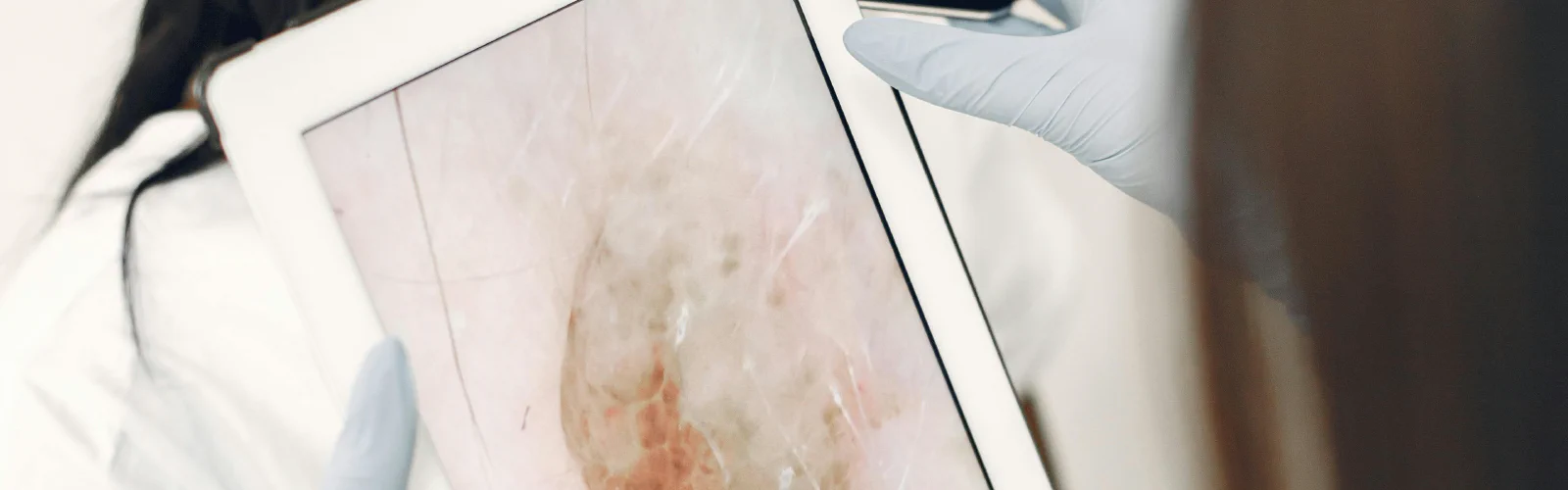
- Dermoscopy: examination of moles and skin lesions with a dermatoscope, a handheld magnifier with polarised light. It shows structures beneath the surface that the naked eye cannot see and helps us decide whether a lesion is reassuring or needs a dermatologist’s opinion.
- Trichoscopy: dermoscopic examination of the scalp and hair. It helps distinguish the main types of hair loss (androgenetic alopecia, telogen effluvium, alopecia areata and scarring types), which matters because they are treated very differently.
- Structured assessment and a written plan for chronic conditions: what to use, where, how often and for how long; what to do when a flare starts; and what to avoid.
- Prescription treatments: creams, ointments, lotions and shampoos; oral antibiotics, antifungals, antihistamines and other tablets where indicated; and advice on over-the-counter moisturisers and cleansers that suit your skin and budget.
- Intralesional steroid injection for keloids and cystic acne lesions, where suitable.
- Simple tests: skin scrapings for fungal infection, swabs, and blood tests where a skin sign may point to an internal cause (for example thyroid disease, diabetes or iron deficiency in hair loss).
- Care across the family: infant rashes, cradle cap, childhood eczema and viral rashes; teenage acne; occupational hand dermatitis; and sun-related skin changes in older adults.
What happens at a skin appointment
A proper conversation first. When the problem started, how it has changed, what you have tried (bring the tubes), what seems to trigger it, and anything relevant in your general health, work, hobbies and family.
Then a careful examination, of the affected areas and often of a wider area of skin, scalp or nails, under good light, with dermoscopy or trichoscopy at Punggol when the clinical situation warrants it. Photographs of how the condition looked at its worst are useful if it comes and goes.
A clear explanation of what we think it is, what we are unsure about, and the plan. Most skin conditions improve gradually rather than overnight, so we set out what improvement to expect, by when, and when to come back.
Referral when it is warranted. If a condition is severe, unusual, not responding as expected, or if a lesion has features of concern, we say so and arrange prompt referral to a dermatologist or surgeon with a proper letter. We continue shared care afterwards.
What it costs
Our consultation fees are time-based, and the full schedule is on our appointment page. Most booked skin appointments take 10 to 20 minutes and fall into the long consultation band. If you have several skin concerns, or a complex condition to review with results and a written plan, book an extended consultation (30, 45 or 60 minutes) so the time is set aside.
Medications, tests and procedures are charged separately and quoted before they happen. Procedure time, including consent, is charged at twice the consultation rate. CHAS and Healthier SG subsidies apply where eligible.
Book a skin appointment
Book a skin or hair appointment
Book at Joo Chiat for reserved time, or at Punggol, where afternoons from 3pm to 6pm are best for longer skin appointments.
Booked skin appointments at both clinics; at Joo Chiat your time is reserved. Walk-ins remain welcome at Punggol for simple skin problems.
What to bring: the creams and medications you are using now (or photos of the labels), photographs of the condition at its worst, and any previous specialist letters or test results.
Simple acute skin problems (fungal infection, impetigo, insect bites, a minor rash) do not need a booking. Walk in at Punggol, Monday to Saturday.
Conditions we commonly look after
Inflammatory skin conditions. Acne from blackheads to inflamed and scarring types; rosacea with facial redness and flushing; eczema and dermatitis of the face, scalp, hands, body and skin folds; psoriasis; chronic hives; and lichen planus. Our patient guides cover eczema skincare, managing a flare, acne, psoriasis and hives.
Skin infections. Ringworm and athlete’s foot, yeast infections in skin folds, impetigo, common warts and molluscum contagiosum.
Hair and scalp. Androgenetic (pattern) hair loss, telogen effluvium, alopecia areata, dandruff, seborrhoeic dermatitis and folliculitis, with trichoscopy at Punggol when the clinical situation warrants it.
Nails. Fungal nail infection, and nail changes related to psoriasis, trauma or general health.
Children’s skin. Infant rashes, cradle cap, childhood eczema, viral rashes, and hand, foot and mouth disease.
Skin signs of internal disease. We look out for skin clues to diabetes, thyroid disease, inflammatory arthritis and connective tissue disease, and investigate or refer where appropriate.
When we refer to a dermatologist
Some things need a specialist, and we say so early. We refer for suspected skin cancer or any lesion with concerning dermoscopic features, blistering diseases, vasculitis, complex ulcers, severe or atypical disease, and treatments outside primary care: excisions, cryotherapy, punch or shave biopsy, phototherapy, systemic immunosuppressants, biologics, Mohs surgery, laser work and aesthetic procedures. After specialist treatment has started, we are glad to continue follow-up in the community where that is appropriate.
Dermoscopy, mole mapping and skin-cancer checks: what we do and do not offer
Dermoscopy: at Punggol, when warranted. Moles and skin lesions are assessed by clinical examination, with dermoscopy at our Punggol clinic when the clinical situation warrants it. Where there is any concern, we arrange prompt referral to a dermatologist.
Mole mapping: no. Full-body mole mapping, automated photography that tracks moles over time, is a specialist dermatology surveillance service. If you need it, we refer you with a letter.
Skin-cancer screening programme: no. We do not run a screening programme. If a specific mole or lesion worries you, book a skin appointment at Punggol and Dr Tan will examine it, with dermoscopy where warranted, and refer where there is any concern.
About Dr Tan’s training
Dr Kenneth Tan is a Family Medicine Specialist, registered on the Singapore Medical Council Specialist Register in Family Medicine, with a Master of Medicine in Family Medicine and a Postgraduate Diploma in Clinical Dermatology (Queen Mary University of London). The diploma is a postgraduate qualification in an area of special interest; it is not a specialist registration in dermatology, and Dr Tan is not a dermatologist. Dermatologists are organ-specific specialists who manage complex skin disease, advanced procedures and hospital-based therapies; our role is to treat what is appropriate in primary care, well, and to recognise early when specialist input is needed.